

 Image 1 of 4
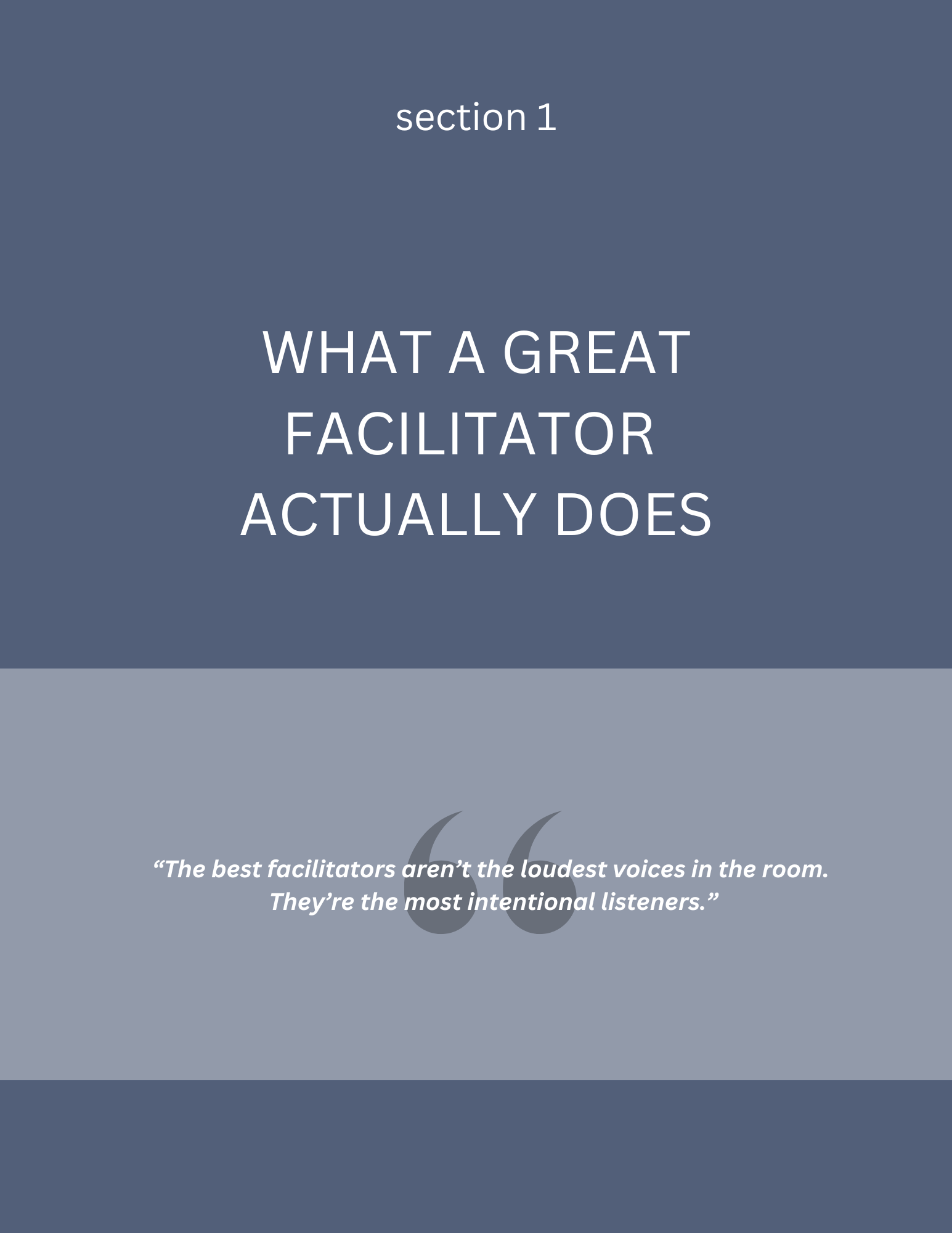 Image 2 of 4
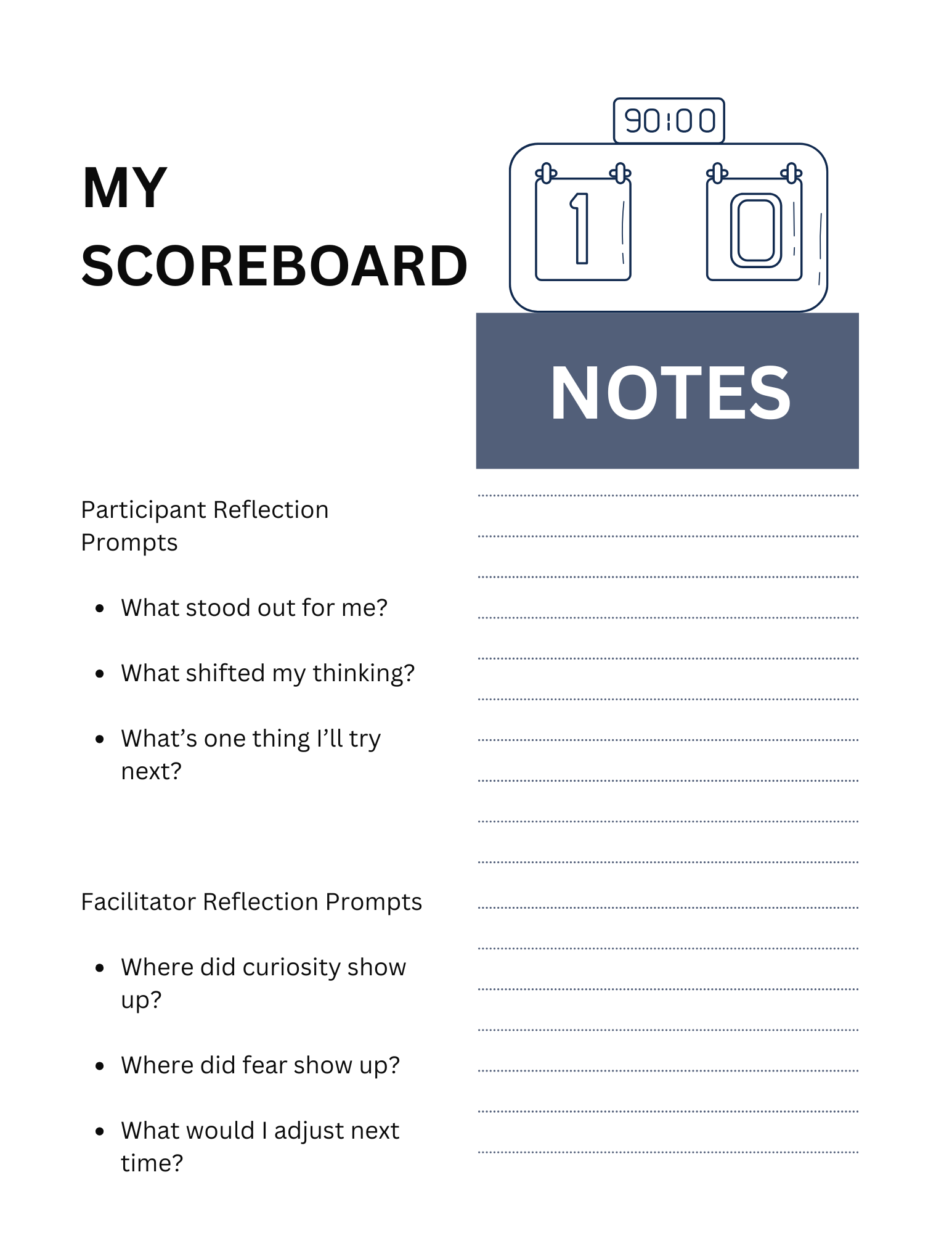 Image 3 of 4
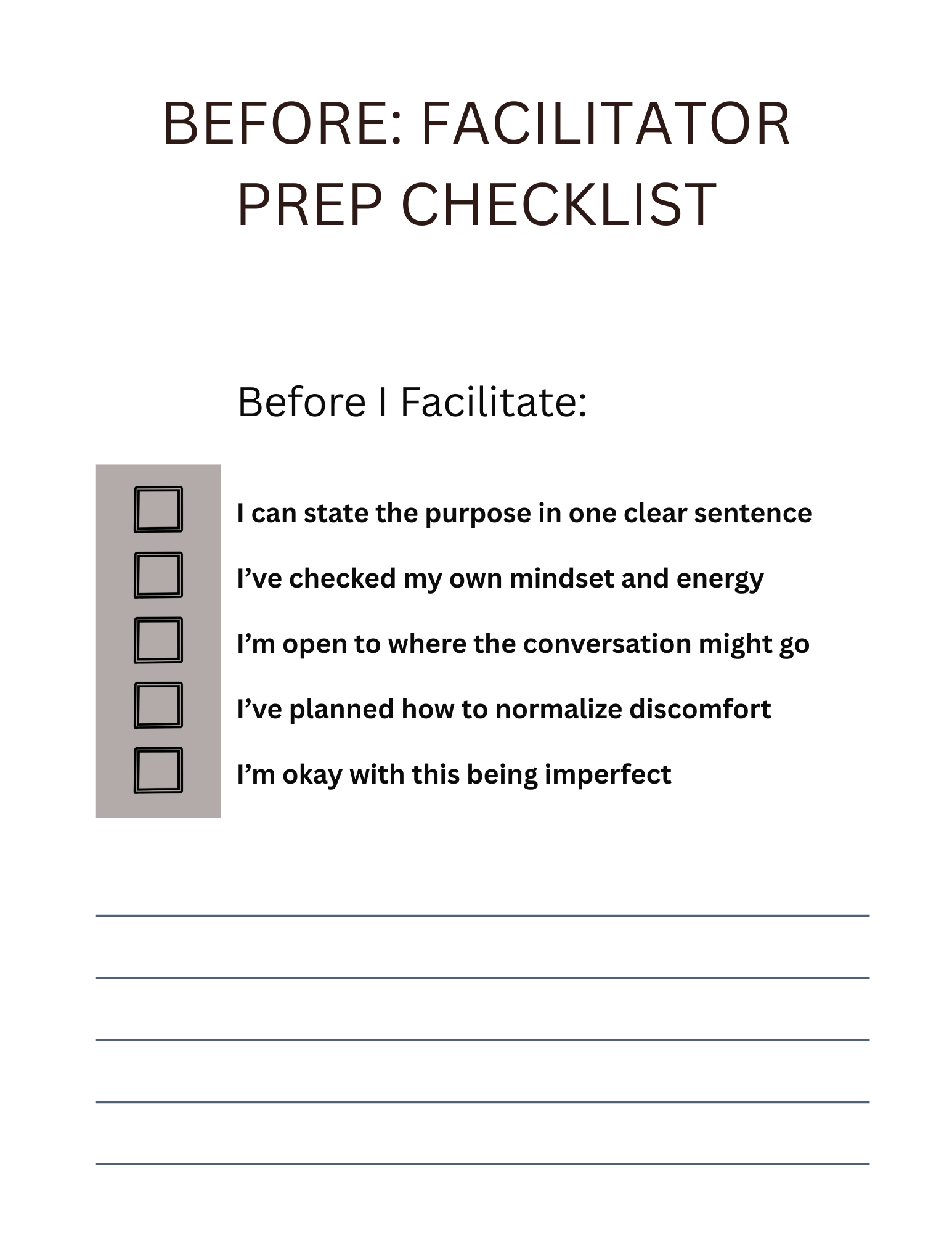 Image 4 of 4
Lead meaningful conversations with confidence—without overthinking it.
Facilitating a powerful conversation doesn’t require having all the answers.
It requires creating the right conditions for discovery.
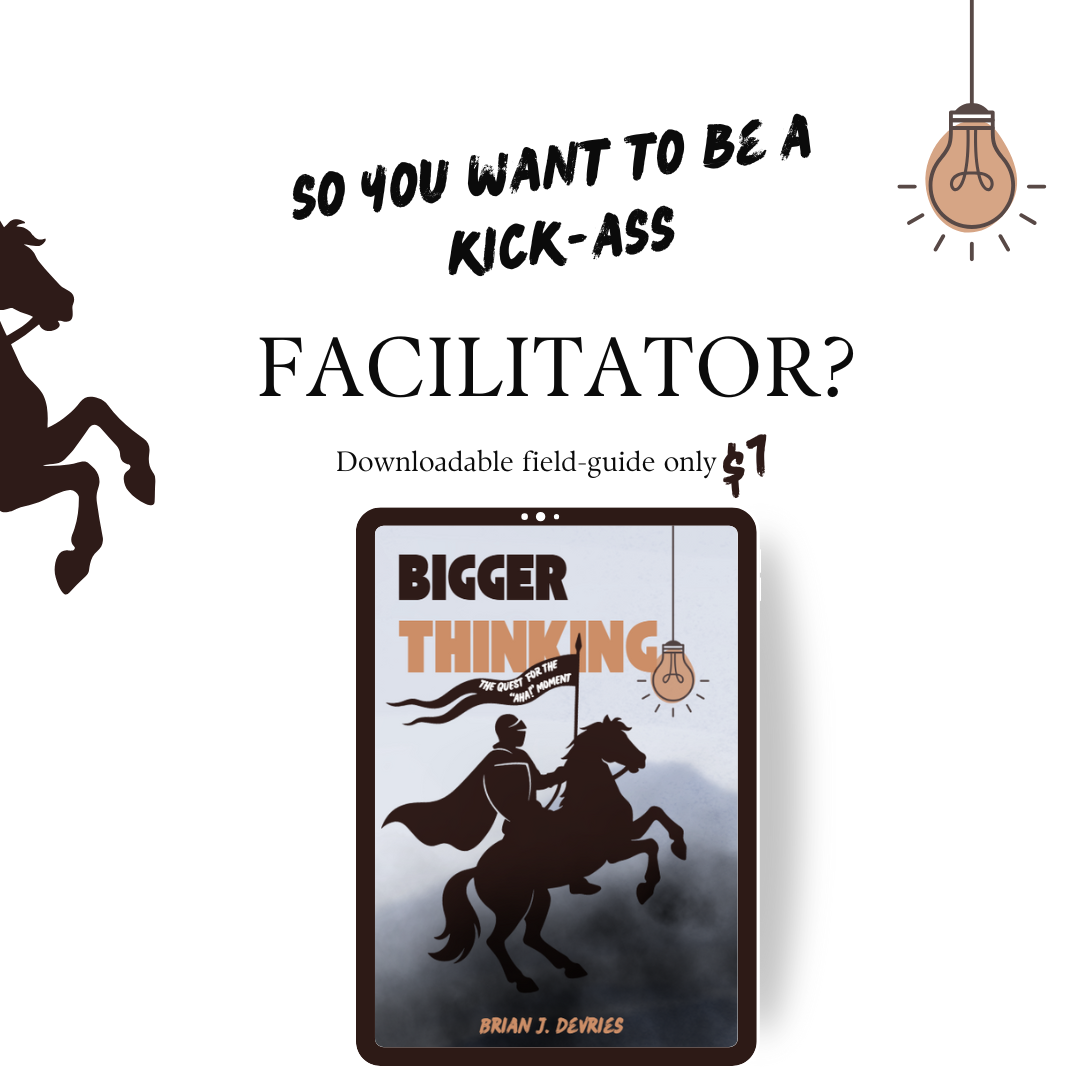
The Brave Thinking Facilitator Playbook, written and guided by Brian DeVries, is a practical, easy-to-use field guide for anyone leading groups, classrooms, teams, or workshops. Grounded in the philosophy of Brave Thinking—courage, curiosity, and critical thinking—this playbook helps facilitators navigate real moments in real rooms.
This isn’t a long course or a rigid script.
It’s a clear, confidence-building guide you can use before, during, and after a session.
A simple, proven flow for leading sessions from start to finish
Clear guidance on what a great facilitator actually does
Practical facilitator language and scripts you can borrow when you’re not sure what to say
Checklists and reflection prompts to help you prepare, adapt, and improve
Dedicated space for notes so you can make it your own
BONUS - A one-page “When This Happens… Try This” quick-response guide
This playbook is designed to be:
Easy to read
Easy to reference mid-session
Easy to revisit and reuse
Whether you’re facilitating with kids, adults, educators, or teams, this guide helps you stay grounded, calm, and intentional—especially when things feel messy or unpredictable.
Lead groups but don’t want to “perform” as the expert
Want practical guidance, not theory-heavy frameworks
Feel confident in your purpose but unsure what to say in the moment
Believe learning happens best through reflection and conversation
A scripted curriculum
A step-by-step training course
A one-size-fits-all solution
Instead, it’s a working tool—meant to be used, marked up, and adapted to your style.
Facilitation isn’t about creating flawless experiences.
It’s about creating brave spaces—where people feel safe enough to think, question, and discover.
You don’t have to have it all figured out.
You just have to begin.
Lead meaningful conversations with confidence—without overthinking it.
Facilitating a powerful conversation doesn’t require having all the answers.
It requires creating the right conditions for discovery.
The Brave Thinking Facilitator Playbook, written and guided by Brian DeVries, is a practical, easy-to-use field guide for anyone leading groups, classrooms, teams, or workshops. Grounded in the philosophy of Brave Thinking—courage, curiosity, and critical thinking—this playbook helps facilitators navigate real moments in real rooms.
This isn’t a long course or a rigid script.
It’s a clear, confidence-building guide you can use before, during, and after a session.
A simple, proven flow for leading sessions from start to finish
Clear guidance on what a great facilitator actually does
Practical facilitator language and scripts you can borrow when you’re not sure what to say
Checklists and reflection prompts to help you prepare, adapt, and improve
Dedicated space for notes so you can make it your own
BONUS - A one-page “When This Happens… Try This” quick-response guide
This playbook is designed to be:
Easy to read
Easy to reference mid-session
Easy to revisit and reuse
Whether you’re facilitating with kids, adults, educators, or teams, this guide helps you stay grounded, calm, and intentional—especially when things feel messy or unpredictable.
Lead groups but don’t want to “perform” as the expert
Want practical guidance, not theory-heavy frameworks
Feel confident in your purpose but unsure what to say in the moment
Believe learning happens best through reflection and conversation
A scripted curriculum
A step-by-step training course
A one-size-fits-all solution
Instead, it’s a working tool—meant to be used, marked up, and adapted to your style.
Facilitation isn’t about creating flawless experiences.
It’s about creating brave spaces—where people feel safe enough to think, question, and discover.
You don’t have to have it all figured out.
You just have to begin.